Kelly Mendoza
Dead ShotKelly Mendoza is The Register’s sharp-eyed photographer and an investigative journalist in everything but title, a woman whose “fiery spirit” sometimes outruns her common sense but whose courage repeatedly pushes the story beyond official explanations. She is also the Mendoza family member most prepared to inherit the newspaper’s mission: she wants not merely to preserve The Register, but to use it to break Statenville’s system of protected secrets. Her partnership with Cal Murphy gives the novel its central reporting alliance, while her technical evidence and willingness to risk herself help turn suspicion into an exposé.
Identity, Ambition, and Introduction
Kelly first appears through Cal’s phone, when her picture and name interrupt his frantic drive to The Register and transform his mood from nervous haste to sudden excitement. Cal is attracted to her leggy, striking presence, shoulder-length brown hair, piercing blue eyes, and proud Basque heritage, but his interest is complicated by the newsroom’s unwritten prohibition on dating fellow employees. His attraction therefore exists alongside professional admiration: he spends more time imagining an invitation to Kelly than thinking about covering the Mariners and the Seahawks.
Her ambitions extend far beyond photography. Kelly declares that Statenville is crawling with corruption and that, although she wants to leave, she also wants to take over The Register and turn over every rock until the town’s corrupt power brokers are behind bars. The paper has belonged to her family for years and is currently published by her uncle Joseph Mendoza, whose son Sammy Mendoza might theoretically inherit it if he ever becomes more serious about his life. Kelly’s uncertain succession therefore carries a larger question about what The Register will become: a stable local business, or an instrument of confrontation. Cal privately hopes Joseph will choose Sammy, not because he doubts Kelly’s ability, but because he expects to leave Statenville and hopes to lure her into a big-city adventure.
Reporting Against the Official Story
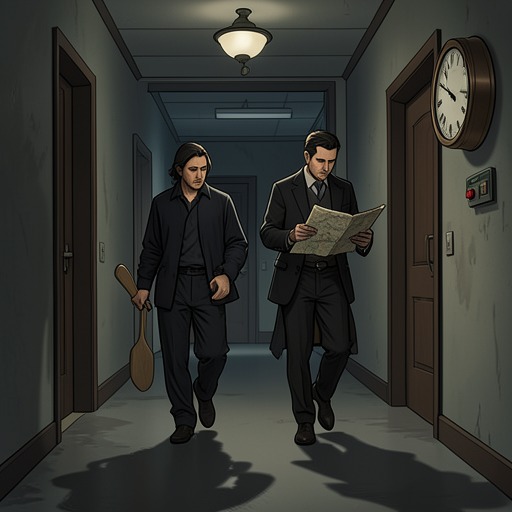
Kelly’s professional instincts place her in direct conflict with the local information gatekeepers. Guy Thompson orders Cal to go to the sheriff’s office, report back, and keep Kelly with him so she can produce a dominant photograph for Wednesday’s paper. The assignment treats her images as part of the newspaper’s packaging, yet Kelly’s presence soon becomes a means of challenging the story that officials want published. Joseph Mendoza and Hunter Jones claim that residents care only about funeral arrangements and flowers for the three dead boys’ families, while Cal and Kelly continue to sense that the deaths conceal something more serious.
When Guy reduces Cal’s work to a reaction piece, the demotion is meant to drain the investigation of force. Cal decides to use that harmless assignment as cover, and Kelly supports the plan, smiling as he commits himself to continuing the case quietly. Her response shows that she is not simply following Cal into danger. She recognizes the value of concealment when the visible newsroom channel has been compromised, and she treats the ordinary article as a disguise for gathering facts that the paper’s own editor is reluctant to pursue.
Kelly also understands that evidence must survive competing public narratives. The town’s authorities and influential figures can dismiss witnesses as unreliable, reshape deaths into acceptable explanations, or bury inconvenient reports. Against that pressure, she relies on direct observation, photographs, and persistent questioning. Her journalism is therefore both ethical and tactical: she seeks the truth, but she also learns when truth must be protected before it can be released.
The Bodies, the Laboratory, and the Drug Conspiracy
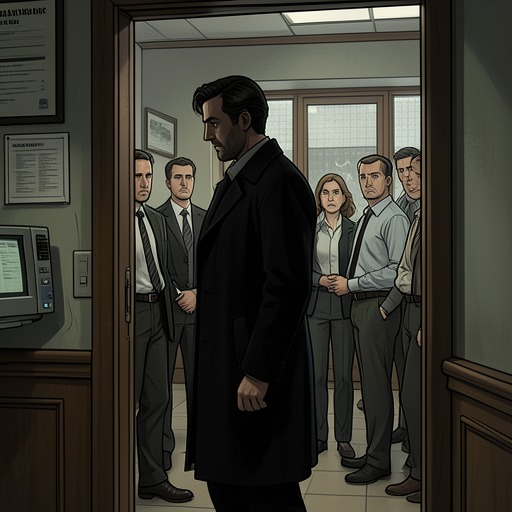
Kelly’s investigation reaches the county coroner’s office, where she confronts her cousin Dr. Kevin Mendoza as he conceals the original report on Cody Murray’s body. Kevin has been instructed to produce a false account and cancel the victims’ toxicology screens, even though the bodies show extensive claw-like slashes that do not resemble a mountain-lion attack. Kelly’s arrival at the door, meeting Kevin’s guilty eyes as their hands grip opposite sides of the knob, turns family intimacy into a confrontation with institutional complicity. The scene reveals why her determination matters: the obstruction is not abstract corruption but a chain of decisions made by people connected to her.
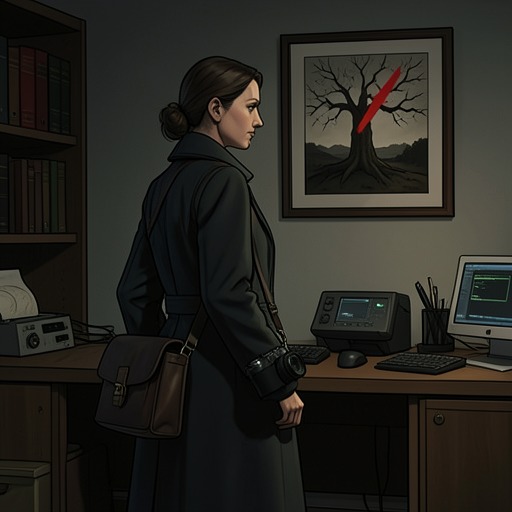
Later, Kelly enters Buddy Walker’s research laboratory and photographs every formula on the walls with her iPhone, emailing the images to her personal account. The device converts an inaccessible room of chemical equations into a portable evidentiary archive. When Cal cannot interpret the formulas, Kelly identifies the crucial possibility: Walker had been altering crystal methamphetamine with chemicals. Her conclusion reframes the deaths. If Cloverdale’s drugs were deliberately laced, the three teenagers did not die from an inexplicable accident or a supernatural attack; they may have been victims of an experiment or distribution scheme.
Kelly immediately connects discovery to prevention. She argues that the investigation must determine what Walker was adding to the drugs and stop more tainted product from entering the distribution network. She accepts that the day’s shipment may already be beyond reach, but presses for action against the next one. Her proposal brings the Federal Bureau of Investigation into the reporting process through Cal’s contact in Salt Lake City, while she remains to investigate why Walker would contaminate drugs at Cloverdale. The division of labor makes her an investigator in her own right: Cal pursues forensic confirmation, while Kelly follows motive, laboratory evidence, and the continuing danger.
Risk, Evidence, and Partnership with Cal
Kelly’s relationship with Cal combines affection, argument, and operational trust. Cal is drawn to her spirit, but she is often the person who supplies the sharper investigative impulse. She helps him resist Guy’s pressure, shares his suspicion of the town’s explanations, and participates in the decision to keep digging under the cover of a routine reaction story. Their professional partnership gradually becomes a mutual survival pact as the investigation exposes people willing to intimidate, abduct, frame, and kill.
That danger does not make Kelly passive. When a threatening letter warns Cal to remain silent and specifically orders him not to tell Kelly or Guy about the truth of the previous night, Kelly becomes part of the secret the letter is trying to isolate him from. The warning identifies her as a potential ally and a potential target, while Cal’s decision to continue investigating confirms that both journalists are moving beyond the protection of ordinary newsroom procedure.
At a critical moment, Kelly crams her camera into her backpack, slips away with Cal toward the Yamaha VMAX, and urges him to hurry after he realizes that a dangerous man has disappeared. Later, at Cold River Canyon, she contorts herself to retrieve the iPhone hidden in her pocket and signals the FBI sniper positioned on a ridge. The phone has been left on an open line so the tactical team can hear and record the confrontation, making Kelly’s camera and phone more than personal tools: they are instruments that preserve testimony when the criminals expect to control the scene.
Change, Recognition, and Narrative Significance
Kelly begins as a talented employee whose future at The Register is uncertain, but her actions establish a vocation stronger than the family succession question. She does not merely photograph events assigned by an editor; she identifies patterns, preserves chemical evidence, challenges a coroner’s concealment, proposes intervention against an active drug shipment, and helps create the record that allows federal agents to act. Her photographic eye and reporting judgment converge in the same principle: what powerful people try to control must be made visible.
Her final position is not simply that of Cal’s assistant or love interest. After Gold and Mercer die at Cold River Canyon, Kelly asks whether Cal captured everything and then uses the concealed phone to signal the waiting FBI team. The investigation’s outcome depends on her preparation and composure as much as on the agents’ firepower. The next day, Cal’s story appears in two newspapers, transforming the private danger they endured into public journalism. Yet Cal remains unsure whether he and Kelly share the same vision of life, even as Josh offers her a position at The Times. That offer confirms the professional value she has earned outside Statenville, while preserving the unresolved tension between her future as a major journalist and her relationship with Cal. Kelly’s significance lies in that combination of inheritance and escape: she is tied to The Register, but her commitment to truth is larger than any one town or newsroom.